
Clear scope before work starts
You get a written plan that spells out containment, what materials are expected to be removed, what gets cleaned, and what drying targets must be met before rebuild.
Serving Waco, Texas & surrounding areas
24/7 Emergency Response
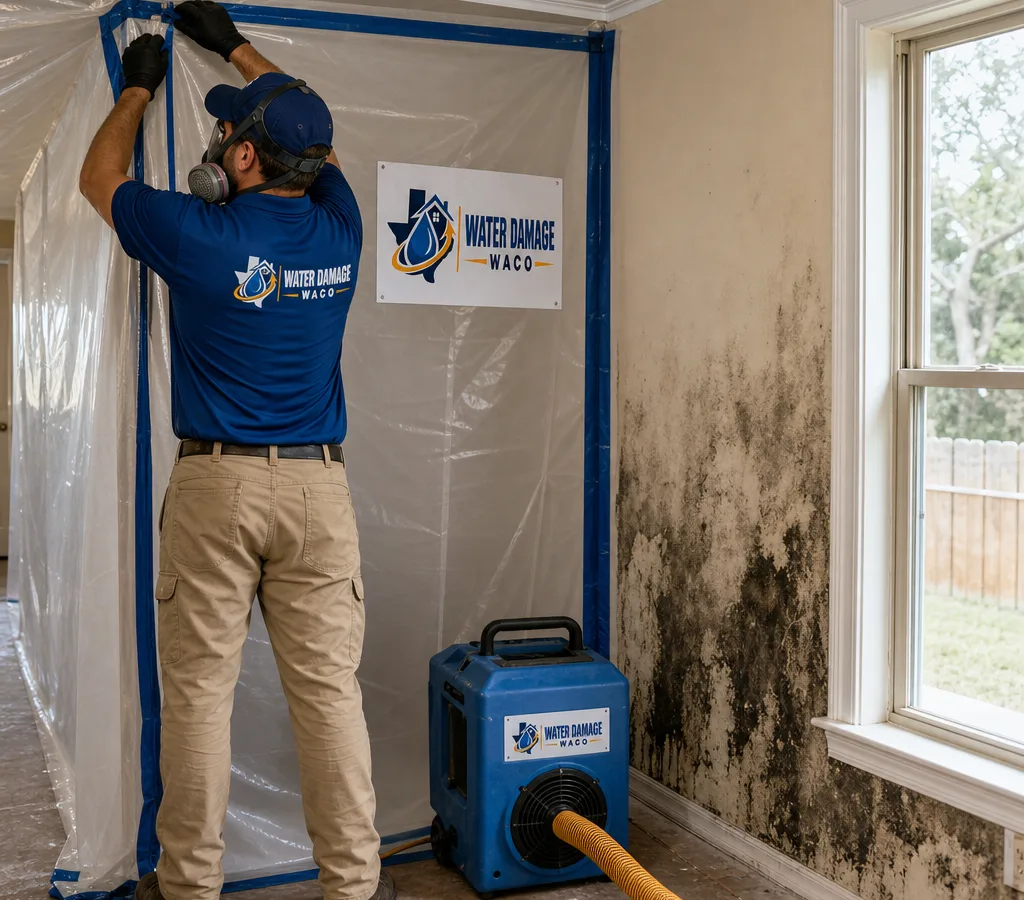
Mold removal in Waco, TX
If you smell musty odors after a leak or see spotting on drywall, get an on-site inspection and a clear remediation plan. Water Damage Waco contains the affected area, removes contaminated materials safely, and helps dry the structure so mold does not return.
Source-first mold cleanup
Searching for mold removal Waco TX usually means something already happened: a roof leak, a plumbing break, an overflowing washer, or a slow drip under a sink that went unnoticed. Mold is a moisture problem first. Cleaning a surface without correcting the wet materials behind it often leads to the same spot coming back.
Our mold removal approach is built around three things: finding where moisture is feeding growth, keeping spores from spreading to clean areas, and removing or cleaning affected materials using established remediation methods. In older Waco homes with pier-and-beam foundations, crawlspace humidity and wet insulation can be part of the story. In newer builds, leaks around HVAC condensate lines, bathrooms, and attic penetrations are common culprits. Either way, the goal is the same: return the space to a safe, dry condition with documentation of what was done.
If you are also dealing with wet floors, ceilings, or insulation, we can coordinate mold remediation with drying work so your project does not stall. Many customers start by getting a plan and scope, then decide how much reconstruction to take on after removal.
Inspection and work planning
A proper mold removal appointment is an inspection plus a work plan, not a quick spray-and-go. We look for visible growth, water staining, and building conditions that keep materials damp, such as blocked weep holes, poorly vented bathrooms, or chronic condensation. We also check adjacent spaces because mold often spreads along framing bays, behind baseboards, or above ceilings.
You will get a straightforward explanation of what is affected and what needs to happen next. Typical remediation work includes:
In Waco, heat and humidity can keep materials wet longer than people expect, especially in closets, utility rooms, and interior bathrooms with limited ventilation. Drying is part of mold removal because moisture left in place is what allows regrowth.
Controlled remediation
You get a written plan that spells out containment, what materials are expected to be removed, what gets cleaned, and what drying targets must be met before rebuild.
We use physical barriers and HEPA filtration to reduce cross-contamination while work is in progress, especially near bedrooms or main living areas.
We do not treat mold as a standalone issue. Leaks, condensation, and humidity problems are identified so the fix lasts.
We remove what needs to go and preserve what does not. That keeps disruption lower while meeting remediation best practices for porous materials.
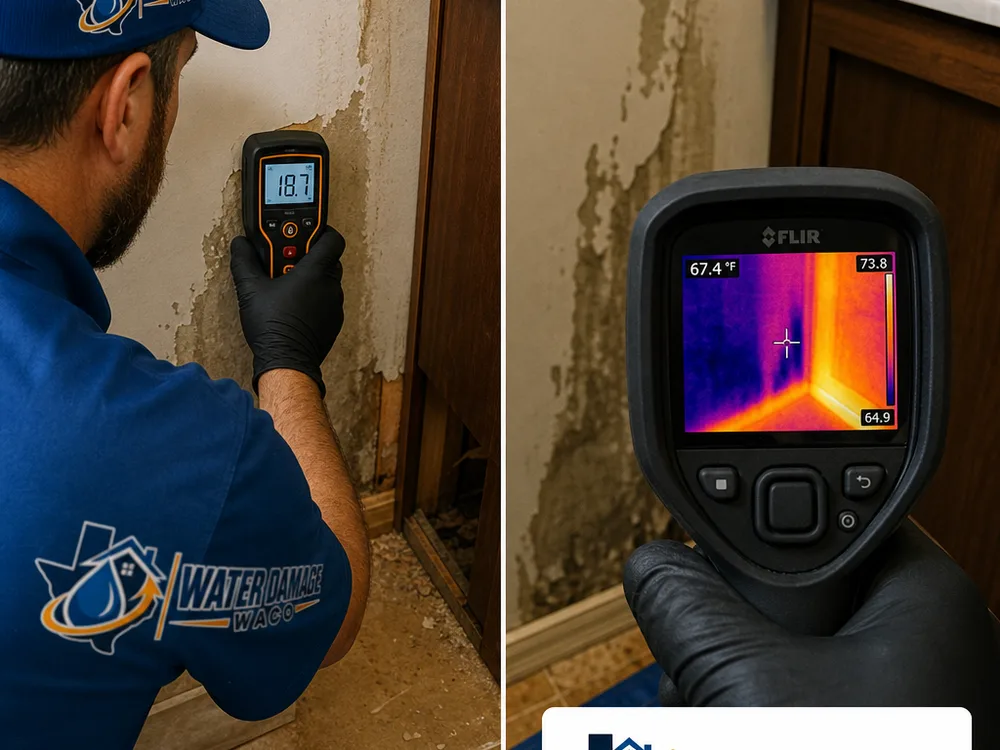
Moisture measurements and dehumidification are part of the workflow so materials are ready for repairs, paint, and flooring without trapping dampness.
Our process
The work follows a controlled sequence from moisture mapping and containment through removal, cleaning, drying verification, and repair planning.
We identify visible growth and likely hidden impact areas, then check moisture conditions around plumbing, exterior walls, ceilings, and HVAC-related components.
We isolate the work zone with poly sheeting and establish controlled airflow. Personal protective equipment and HEPA filtration are used throughout the project.
Drywall, insulation, carpet pad, and other porous items with confirmed contamination are removed and disposed of properly to stop ongoing spore release.
Framing, subfloors, and hard surfaces are HEPA vacuumed and cleaned. Where appropriate, we apply an antimicrobial treatment to help address residual contamination.
We run dehumidifiers and air movers as needed and re-check moisture so the space is dry enough for repairs. If conditions suggest a larger hidden issue, we explain the options before proceeding.
Once removal and drying are complete, we help you plan next steps for putting the space back together. Many clients bundle this with water damage restoration when mold follows a recent loss.
Planning your remediation scope
Mold removal in Waco typically ranges from about $750 to $3,500 for a small to mid-size contained area, while larger or multi-room remediation with demolition and drying often runs $4,000 to $10,000+. A small closet or limited wall section is usually on the low end; a bathroom or laundry leak that affected multiple materials can push costs higher.
Final pricing depends on the size of the affected area, how far contamination extends behind finishes, what porous materials must be removed, access for attic or crawlspace work, and how much drying is required. The exact cost is confirmed after an on-site inspection and a written scope.
Customer proof
“We had a musty smell after a slow leak behind the washer. They explained what was wet, set up containment, and only removed what was necessary. The drying plan was clear and the house smelled normal again.”
“Mold showed up along a bedroom exterior wall. The crew found damp insulation, cleaned the framing, and tracked moisture until it was actually dry. That level of detail gave us confidence to repair the wall.”
Practical answers
Start times depend on current demand, but mold remediation is usually scheduled quickly because delays allow moisture and contamination to spread. If the issue followed a fresh leak or flooding, getting containment and drying started first often prevents a bigger tear-out later.
Yes. When mold follows water intrusion, the work plan typically combines containment, removal of affected porous materials, and structural drying so you are not paying for overlapping visits. Coordinating these steps matters in humid Central Texas conditions where materials can stay damp without active dehumidification.
Often it is, when the affected area can be fully contained and you can avoid the work zone, but it depends on the location and size of the mold. For example, remediation in a hallway return-air path or near bedrooms may require different precautions than a contained garage wall.
Porous materials that hold contamination are commonly removed, including drywall, insulation, carpet pad, some ceiling tiles, and certain composite woods. Solid framing and other non-porous surfaces are often candidates for detailed HEPA cleaning, but the decision depends on condition and extent of growth.
Mold remediation can be performed based on visible growth and moisture conditions, but testing can be useful when symptoms persist, the source is unclear, or you need baseline documentation. If testing is appropriate for your situation, we can explain options and what the results can and cannot tell you.
Mold returns when moisture returns. The most reliable prevention steps are fixing the leak or condensation source, drying materials to appropriate levels before closing walls, and improving ventilation or humidity control in problem areas like bathrooms, laundry rooms, attics, and crawlspaces.
If you suspect mold behind drywall or after a leak, get a professional inspection and a written remediation plan so you know what needs to be removed, what can be cleaned, and what must be dried before repairs.
Call for Emergency HelpStart with an assessment
Tell us what you are seeing and where it started. We will schedule an on-site assessment in Waco, explain the scope in plain language, and outline next steps for safe removal and dry-out.