
Inspection with a written scope
We identify affected materials, likely moisture sources, and the boundaries of the work area so the project stays controlled and predictable.
Serving Waco, Texas & surrounding areas
24/7 Emergency Response
Mold remediation in Waco, TX
If you smell a musty odor, see staining, or have had a leak, you need a plan that removes mold at the source and keeps it from coming back. Water Damage Waco inspects, contains, cleans, and restores affected areas with clear documentation and practical next steps.
A complete remediation scope
Waco mold remediation is more than wiping visible growth. A proper remediation job includes finding and correcting the moisture that fed the mold, isolating the work area so spores do not spread to clean rooms, removing unsalvageable porous materials, and HEPA cleaning and detailed wipe-down of remaining surfaces.
Homes and businesses in Waco often discover mold after a plumbing leak, roof intrusion, HVAC condensation, or a past flooding event. The longer materials stay damp, the more likely mold is to colonize drywall paper, insulation, carpet backing, and the underside of wood.
Common signs that professional remediation may be needed include:
We focus on safe containment, thorough cleaning, and a clear scope. If water intrusion is the root cause, our team can also handle water damage restoration as part of the recovery process.
Controlled cleanup and removal
We identify affected materials, likely moisture sources, and the boundaries of the work area so the project stays controlled and predictable.
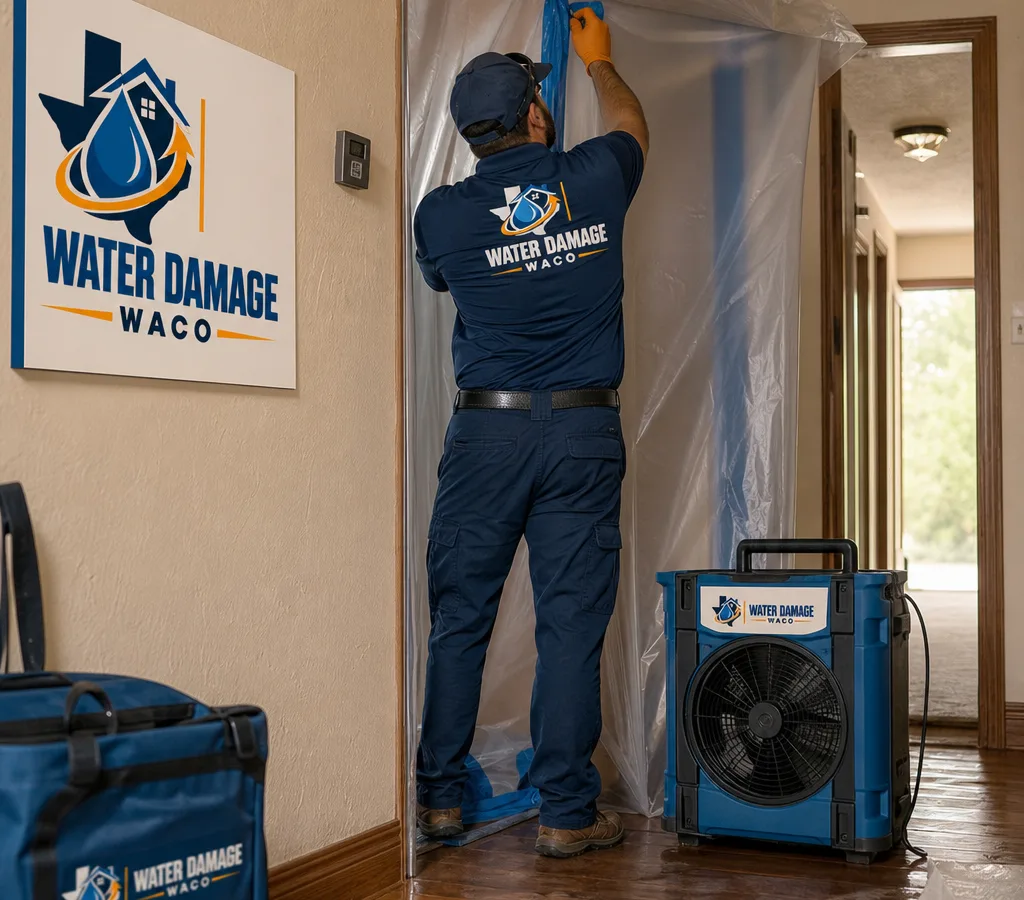
We use containment barriers and HEPA-filtered air control when conditions call for it, so disturbed spores stay in the work zone.
When drywall, insulation, carpet pad, or other porous materials are contaminated, removal is often the correct fix because mold roots into the material.
After removal, we HEPA clean and wipe remaining framing and surfaces to reduce particulate and microbial residue.
Remediation only holds when moisture is addressed. We verify drying targets and explain practical steps to prevent re-growth.
When materials are removed, we help plan the rebuild steps so the space can return to normal use with fewer delays.
Moisture behind finished surfaces
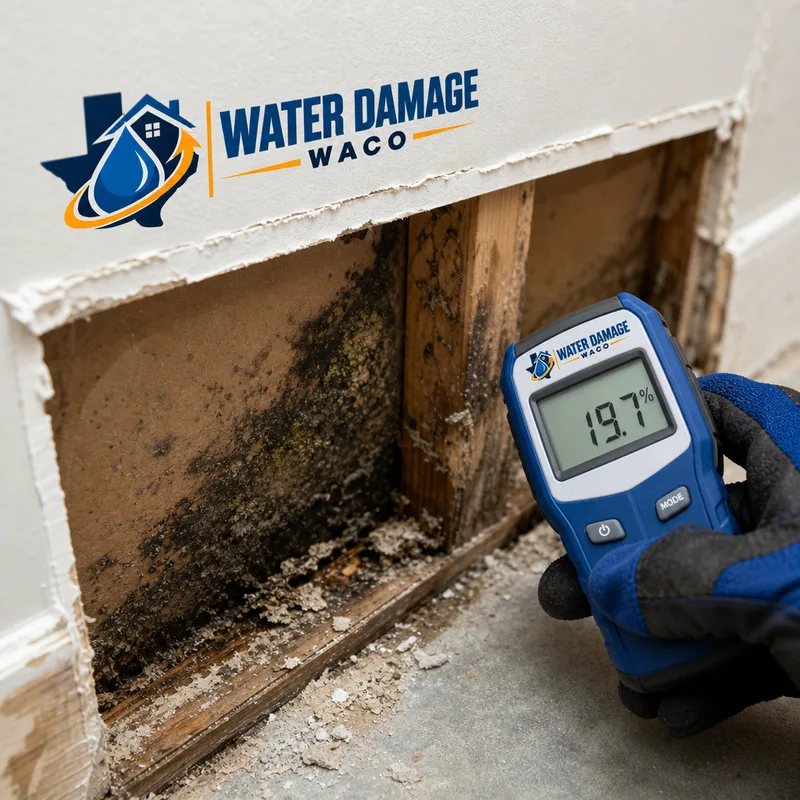
Mold grows where moisture stays trapped. In Central Texas heat, air conditioning can create condensation problems, and small leaks can stay hidden until odor or staining shows up.
We commonly find mold in:
In neighborhoods with a mix of older and updated construction, hidden cavities can be a challenge. Around Castle Heights and older corridors near downtown, remodel layers and past repairs can conceal moisture pathways. That is why inspection and containment come first.
Our process
The work moves in a controlled sequence from investigation and containment through cleaning, drying verification, and restoration planning.
We look for active leaks, condensation sources, and damp building materials using visual inspection and moisture readings. The goal is to define the true affected area, not just what you can see.
We isolate the work zone with plastic sheeting, establish controlled entry, and use HEPA filtration when appropriate. This limits cross-contamination to the rest of the property.
Contaminated porous materials are removed and bagged out. We protect adjacent finishes when possible and keep the removal boundary consistent with the written scope.
We HEPA vacuum exposed surfaces and perform a detailed wipe-down with appropriate cleaning agents for the substrate. We focus on the framing, sheathing, masonry, and nearby contents that remain after removal.
We confirm materials are drying toward normal ranges and outline what needs to change so mold does not return, such as fixing a leak, improving airflow, or addressing HVAC condensation.
Once the area is clean and dry, we coordinate next steps to rebuild the removed areas so the space is functional again.
Planning the scope
Mold remediation in Waco typically ranges from about $1,500 to $6,500+, depending on how many rooms are affected and whether drywall, insulation, flooring, or cabinets must be removed. A small, contained area like the space under a sink may fall near the low end, while multi-room or HVAC-adjacent contamination can push costs higher.
Final pricing depends on the size of the containment, how much porous material is unsalvageable, access to tight attics or crawlspaces, and the amount of detailed cleaning required. The exact cost is confirmed after an on-site inspection and written scope.
If you suspect mold, get it evaluated early. A fast inspection can limit how far remediation has to go and helps determine what to remove, what can be cleaned, and what must dry before rebuilding.
Call for Emergency HelpPractical answers
Most mold remediation projects take 1 to 3 days for the remediation work, then additional time for drying and restoration depending on what was removed. A small, well-contained area can sometimes be completed in a single day, while multi-room jobs or attics and crawlspaces typically take longer because containment, careful removal, and repeated cleaning steps matter.
Porous materials like drywall, insulation, and carpet pad often need removal when they are mold-contaminated because growth can penetrate the material. Non-porous and semi-porous materials, including some framing, masonry, and certain plastics, can often be cleaned and treated after proper containment, HEPA vacuuming, and wipe-down.
Mold can return if moisture returns, even after a thorough cleanup, so the prevention plan is part of the job. We focus on identifying the likely moisture source, confirming drying progress, and recommending practical corrections so the cleaned area stays dry under normal conditions.
It depends on where the mold is and how the area is contained, but many households can remain in the home when the work zone is properly isolated. If the affected area is large, involves main living spaces, or someone in the home has heightened sensitivity, we may recommend limiting access or temporarily relocating from nearby rooms during active removal.
Testing is not always required to proceed with remediation because visible growth and moisture damage can justify a direct remediation scope. If you need testing for documentation or conditions are unclear, we can discuss third-party testing options and how results should be interpreted alongside the inspection findings.
Avoid disturbing the area, and do not run fans that blow directly across visible growth because that can spread spores. If there is an active leak, stop the water source if it is safe to do so, and keep pets and children away from the affected room until the inspection defines the proper containment approach.
Start with an inspection
Tell us what you are seeing and where the moisture started. We will schedule an inspection, provide a written scope, and walk you through containment, cleanup, and the steps that help prevent mold from returning.